

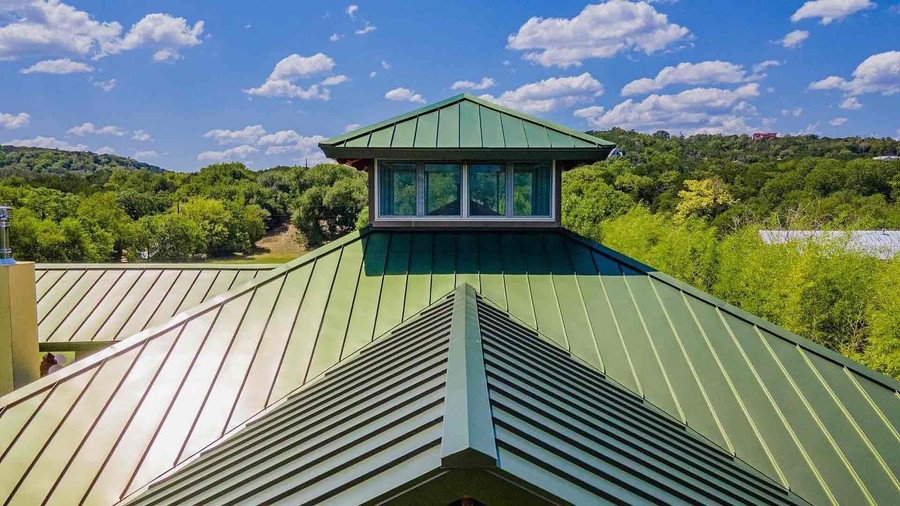
Choose a panel gauge by matching loads, spans, and climate. 24-gauge (thicker) boosts screw pull-out, impact resistance, and limits oil-canning, enabling wider purlin spacing and better performance in high-wind, hail, and heavy-snow zones. 26 gauge is lighter, cheaper, and easier to handle, but it dents more easily and vibrates more, and may require tighter fastener spacing. Verify uplift PSF with manufacturer load tables, consider FM 4473 hail ratings, and compare lifecycle costs, finishes, and assemblies to optimize durability, comfort, and budget—more awaits. Read more aboutmetal roof gauge below.
What Metal Roof Gauge Means and Why It Matters
Although “gauge” sounds abstract, it’s simply the standardized number that indicates a metal panel’s thickness—and, by extension, its strength, weight, and performance under load. You use gauge to align design intent with structural demands, fastener strategy, and code exposure categories. That’s the gauge measurement importance: it’s the numeric control that ties panel rigidity, deflection limits, and attachment spacing to predictable outcomes. When you specify correctly, you reveal the benefits of metal roofing, such as a longer service life, tighter weather seals, quieter operation in rain, and reduced oil canning.
You don’t guess; you reference manufacturer load tables, substrate type, span conditions, and wind uplift requirements, then select a gauge to meet the governing criteria. Proper gauge selection also harmonizes with coating systems, thermal movement allowances, and penetrations, safeguarding building performance and lifecycle ROI.
24 Vs 26 Gauge: Thickness, Weight, and Strength Compared
With gauge defined as the numeric stand‑in for panel thickness and load capacity, you can now compare common options against 26 gauge to set spans, fastener patterns, and uplift resistance. In a gauge comparison, 26 gauge is thinner and lighter than 24 gauge, so it carries less dead load but also provides lower section modulus. Expect 24-gauge to deliver higher pull‑through resistance, better screw‑holding, and stiffer panels at equal profiles.
You’ll typically see 24-gauge at around 0.023–0.027 inches thick, versus roughly 0.017–0.022 inches for 26-gauge, depending on coating. That thickness delta increases panel weight and bending strength, allowing wider purlin spacing and fewer fasteners at the same design loads. For material durability, thicker steel better resists denting and oil‑canning, while lighter 26 gauge eases handling and reduces structural load.
Performance in Weather: Wind, Hail, Snow, and Coastal Conditions
Because weather loads drive most roof failures, gauge choice should align with site conditions and code loads for wind, hail, snow, and marine exposure. In high-wind zones, specify panels, clips, and fasteners tested to ASTM E1592/UL 580, then favor 24 gauge for higher section modulus and screw pull-out capacity. For hail, consult FM 4473 ratings; thicker panels are better at resisting denting and seam fatigue. In snow country, 24-gauge limits oil canning under drift loads and supports engineered snow retention.
- Corner and edge zones demand closer clip spacing; don’t extrapolate field-zone values.
- Use stainless or coated fasteners and sealed laps to maintain weather resistance.
- In marine air, pair 24-gauge with aluminum or AZ55 coatings for coastal durability and to mitigate crevice corrosion.
Cost, Lifespan, and Maintenance Trade-Offs
You’ll weigh upfront material costs against service life and maintenance frequency for each gauge. Thicker panels cost more on day one but reduce denting, fastener fatigue, and coating wear, extending intervals between upkeep. Thinner gauges lower initial costs, but you’ll budget for more inspections, more frequent fastener retightening, and earlier panel or coating replacement.
Upfront Material Costs
Although thicker panels tend to command higher prices per square foot, upfront material costs are only one factor in a gauge decision that also affects lifespan and maintenance. You’ll weigh upfront expenses against material quality, finish systems, and profile complexity. A 24-gauge panel typically carries a higher line-item price than 26-gauge, driven by steel mass and tighter tolerances. However, supplier tiers, coil coatings, and fastening systems can narrow or widen the gap.
- Verify delivered thickness and coating weights; nominal gauge can mask tolerance drift.
- Compare paint systems (PVDF vs SMP) and substrate (AZ50/AZ55 vs G90) to align budget with performance.
- Include trim, underlayment, and fasteners; component choices shift the delta more than gauge alone.
Request itemized quotes, confirm panel coverage width, and normalize by installed square to avoid false economies.
Longevity and Upkeep
Even when budgets feel tight, gauge choices set the arc of service life, repaint cycles, and repair frequency. A 24-gauge panel resists deformation, wind uplift, and impact better than 26-gauge, so coatings last longer and seams stay tighter. If you pair heavier gauge with high-solids PVDF finishes and compatible fasteners, you reduce corrosion cells and repaint intervals.
Your installation techniques drive longevity. Use clip systems with thermal movement slots, continuous underlayment, and ventilated assemblies to limit condensation. Specify sealant class per ASTM C920 and fastener seat torque to prevent micro-leaks. With 24-gauge, typical maintenance frequency drops to semiannual inspections and targeted sealant refreshes; 26-gauge may need quarterly checks and more dent remediation. Over 30–50 years, fewer service events offset the higher initial outlay and minimize downtime.
Noise, Energy Efficiency, and Comfort Considerations
You’ll want to quantify how gauge affects rain and hail noise, since thinner panels flex more and transmit impact sound. Pair the panel choice with tested underlayments and insulation R-values to control sound transmission and heat flow. Specify assemblies that manage thermal bridging and air sealing so you maintain stable indoor temperatures and consistent comfort.
Rain and Hail Noise
While thin panels can amplify impact sound, gauge selection isn’t the only driver of rain and hail noise on a metal roof. You’ll hear differences in rain noise and hail impact based on panel profile, substrate stiffness, and fastening strategy. A 24-gauge panel resists oil-canning and vibrates less than 26-gauge, but geometry and attachment often dominate the acoustic result. Consider how load paths, damping layers, and deck continuity control vibration and sound radiation.
- Choose deeper rib or structural profiles to raise panel stiffness and shift resonance out of common rain spectra.
- Use continuous solid decking with properly spaced fasteners to suppress panel “drumhead” behavior during hail impact.
- \Add high-friction underlayment or clip systems with thermal-movement allowance to curb micro-slip squeal and transient ringing.
Engineer for stiffness, damping, and decoupling to reduce perceived loudness.
Insulation and Thermal Comfort
Controlling panel vibration is only part of comfort; insulation sets the baseline for noise attenuation, heat flow, and condensation control under a metal roof. You’ll get predictable performance when you pair gauge selection with code-compliant insulation materials and continuous thermal barriers. Use above-deck rigid polyiso or mineral wool to interrupt thermal bridges at purlins, then add sealed interior batts or spray foam for airtightness. Target tested R-values per climate zone; verify with NFRC/ASHRAE tables. Incorporate vented air spaces or above-sheathing ventilation to lower deck temperatures and purge moisture. Specify Class A vapor retarders on the warm side where required, and detail taped seams and gasketed fasteners. Thicker 24-gauge panels resist oil-canning and transmit slightly less impact noise, but insulation drives energy efficiency and comfort.
How to Choose Based on Climate, Roof Design, and Budget
When should you step up to a heavier gauge versus save with a lighter panel? Start with climate considerations. In high-wind, hail, coastal, or heavy-snow zones, a 24-gauge panel resists deformation, oil-canning, and fastener pull-out. In mild, low-wind regions, 26 gauge often meets code and lowers load on framing. Map this to roof geometry: complex hips/valleys and low-slope assemblies benefit from stiffer 24 gauge; simple, steep-slope gables can leverage lighter panels without compromising performance. Balance performance with budget constraints and lifecycle cost.
- Wind uplift: verify uplift ratings against local design pressures; select the gauge that meets PSF with margin.
- Span and purlin spacing: longer spans favor 24 gauge for serviceability.
- Impact and corrosion: hail or salt exposure drives thicker metal and upgraded coatings.
Conclusion
You’re weighing two sheets on a scale: 24-gauge, thicker, stiffer, storm-ready; 26-gauge, lighter, cheaper, easier to handle. One shrugs off hail, wind uplift, and coastal salt; the other trims budget and labor on simpler roofs. Picture fasteners biting clean, panels resisting oil-canning, underlayment damping noise, ventilation cutting heat. In cold snow country or hurricane zones, choose 24. In mild climates with simple spans, 26 works. Match gauge to climate, spans, fastener pattern, and budget.