

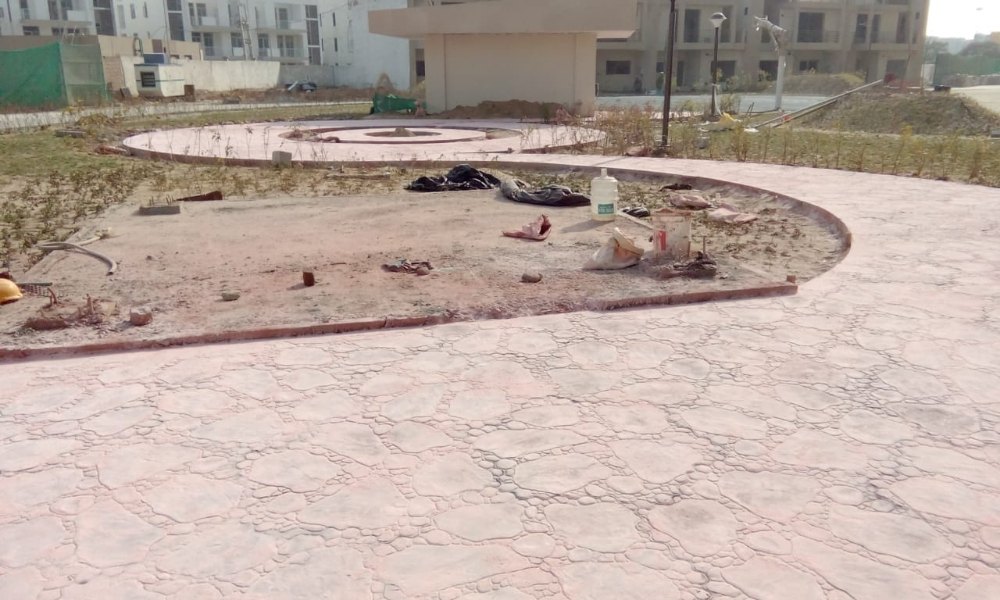
Integrating concrete patios with existing landscaping requires careful planning to protect established plants. Hardscaping and surrounding greenery become disconnected due to poor coordination. Landscape conditions are assessed by concrete patio contractor before installations are designed to complement rather than conflict with them.
Tree root protection
A concrete slab installed nearby can harm established trees’ roots and reduce their stability. The root zone extends far beyond the visible canopy, so contractors must identify protected areas before digging. Tree roots are prevented from getting water and oxygen by concrete and weaken over time. Curves and irregular shapes are often used on patio edges to avoid cutting through roots. Water and air can pass through permeable alternatives when concrete must be placed near roots. A root barrier guides new concrete away from sensitive areas to prevent future encroachment. Working around large trees requires arborists to map and protect roots and prevent damage that might kill them.
Irrigation system coordination
Existing irrigation systems need careful mapping before excavation starts. Lines often pass through areas planned for concrete installation. Contractors identify irrigation zones, valve boxes, and line paths before breaking ground. This prevents accidental cuts that can stop watering to established plants. Main supply lines and zone control valves may require temporary relocation during construction. They are moved back after the concrete has cured. There is a need to adjust the sprinkler head near the patio edge. Surfaces are protected from efflorescence stains or slippery algae growth. Planting beds adjacent to patios need drip irrigation rerouted around concrete edges to maintain coverage without crossing under future repairs. Post-installation irrigation system testing confirms all zones function properly after construction activity, before declaring the project complete.
Planting bed boundaries
- Concrete edges adjacent to planting beds require clean separation, preventing soil migration onto concrete surfaces and root penetration under slabs
- Edging materials installed along patio perimeters create defined transitions between the concrete and the adjacent garden areas
- Bed heights relative to finished concrete elevations affect drainage direction and mulch containment near patio edges
- Planting selections near concrete edges consider root growth patterns, avoiding aggressive species that crack surfaces through root pressure
- Seasonal plant maintenance access needs accommodation in patio designs, ensuring gardeners reach all bed areas without crossing finished concrete repeatedly
Grade transition management
Elevation differences between existing landscape grades and finished patio surfaces require careful transition management, preventing erosion and creating a natural appearance. Retaining walls, planted slopes, or stepped transitions handle grade changes exceeding several inches between patio surfaces and adjacent ground levels. Contractors design transitions directing water away from both patio surfaces and adjacent planted areas, preventing concentrated flows that erode soil around patio edges. Mulched transition zones between concrete edges and planted areas absorb water while providing flexible visual boundaries that accommodate minor settlement without creating obvious gaps or cracks. Stone or brick border courses installed along concrete edges create defined transitions, matching garden character, while protecting concrete edges from damage during landscape maintenance activities using equipment near patio perimeters.
Concrete patio integration with existing landscaping requires protecting established tree root zones through careful edge placement, coordinating with irrigation systems before and after installation, creating defined boundaries between concrete and planting beds, and managing elevation transitions that maintain landscape character while ensuring proper drainage throughout completed installations.