

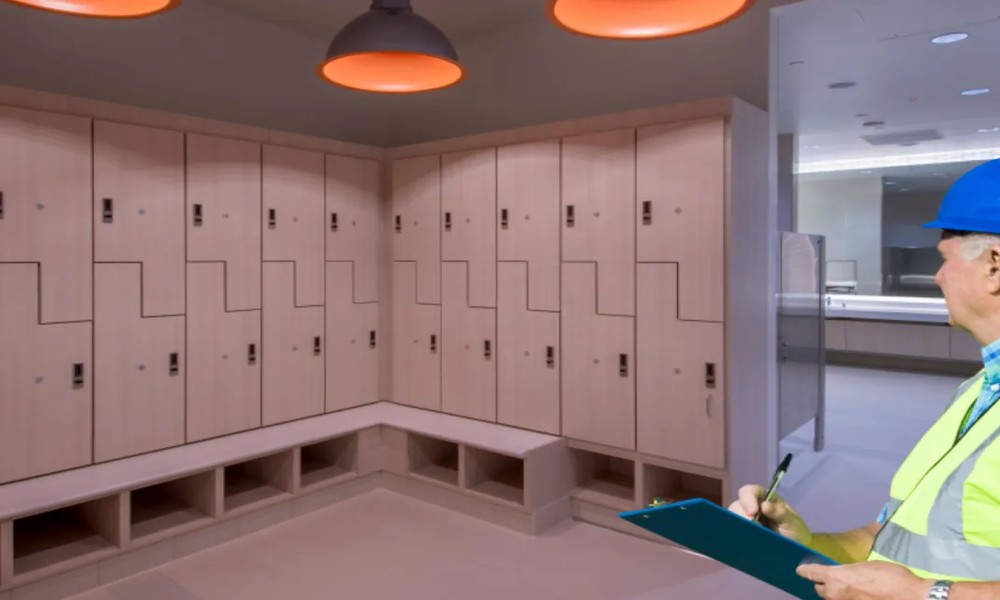
Commercial locker purchasing decisions made on initial material cost without total cost of ownership analysis produce outcomes that cost significantly more over a 15-year lifecycle than premium material specifications would have. The operating cost components that vary by locker material are not captured in catalog pricing comparisons but are fully realized in facility management budgets.
How Does Each Material Category Fail in Commercial Applications?
The failure mode of each material category determines its maintenance cost profile over time:
- Powder-coated steel: edge corrosion initiates at cuts and fastener penetrations within 2 to 5 years in humid environments, progressing to face panel rust within 12 to 18 months of edge compromise
- Phenolic: fails through hardware degradation and impact damage to panel edges, not material degradation, making targeted panel replacement feasible
- Solid plastic: fails through hardware degradation and surface scratching, with no corrosion or delamination failure mode under standard commercial conditions
What Maintenance Labor Cost Differences Apply by Material?
Powder-coated steel locker maintenance in high-humidity applications involves 4 recurring labor activities that phenolic and solid plastic specifications eliminate:
- Annual inspection for corrosion initiation at edges and fastener locations
- Touch-up painting of corrosion sites before they propagate across the face panel
- Hardware lubrication to prevent corrosion seizure of hinges and lock mechanisms
- Unit replacement when surface corrosion exceeds repair thresholds
Specifiers selecting commercial locker systems for humid applications should develop a 15-year total cost model that includes unit replacement frequency and annual maintenance labor hours before comparing material alternatives.
How Do Replacement Cycles Affect Capital Budget Planning?
The capital budget implications of locker replacement frequency are more significant than annual maintenance costs for facilities operating on institutional capital budget cycles. Powder-coated steel lockers that require replacement every 10 to 12 years in moderate humidity represent 2 full replacement cycles within the 20 to 25-year capital planning horizon over which phenolic or solid plastic lockers may require no replacement.
What Do Warranty Terms Reveal About Manufacturer Confidence?
Manufacturer warranty terms provide a vendor’s perspective on expected product performance that technical data sheets alone do not reveal. 2 warranty comparisons are most relevant for humid environment specifications:
- Warranty period for phenolic and solid plastic products in humid applications versus powder-coated steel: longer warranty reflects material confidence and limits the facility’s unwarrantied replacement cost exposure
- Coverage for hardware components versus panel materials: hardware-only warranties may indicate that the manufacturer expects panel performance to exceed hardware service life, or the reverse.